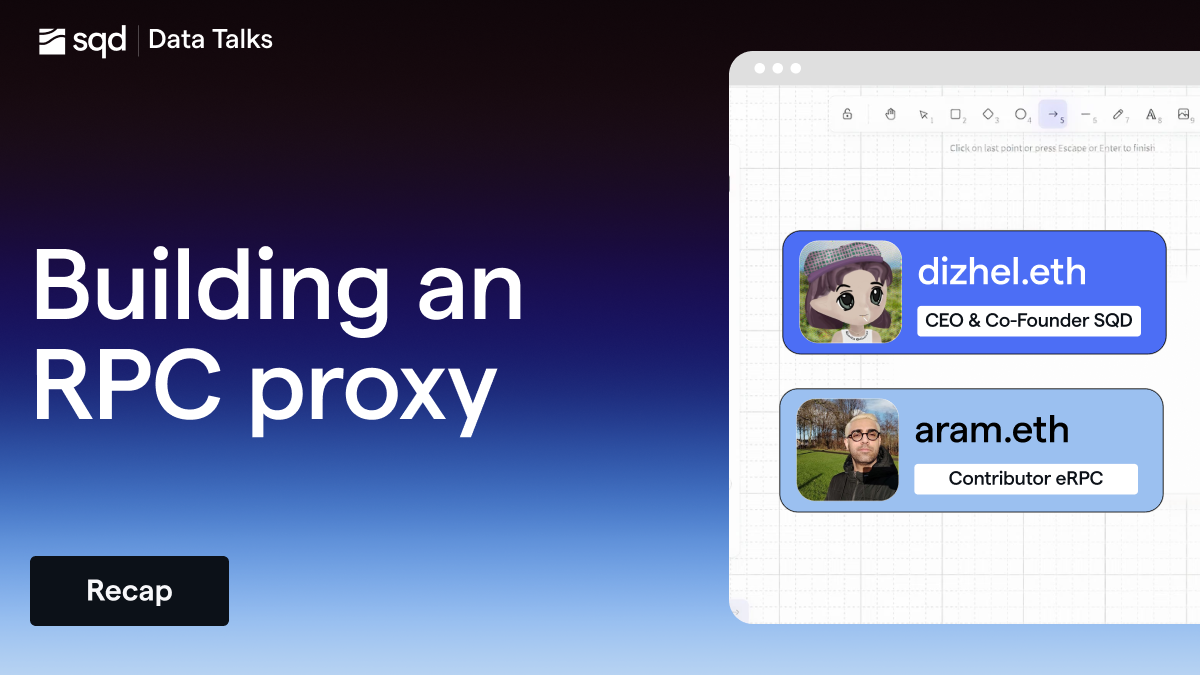
Earlier in May, Subsquid Labs launched the first episode of their new series: SQD Data Talks, aimed at discussing blockchain, data, and open-source topics with industry experts.
The First Guest: Aram from eRPC
The inaugural stream featured Aram, a contributor to eRPC — an RPC proxy utilized by established crypto projects like Pimlico — and creator of the Blockchain Data Standards Group.
Aram’s Path to Crypto
Aram’s journey into blockchain stems from personal conviction. Coming from Iran, he views crypto as essential rather than optional. For people under sanctions, cryptocurrency represents “the only hope of accessing a financial system.”
Origins of eRPC
When Aram’s team began developing smart contracts, they encountered an unexpected challenge: “Accessing the data took even longer than writing the smart contract itself.” After exploring solutions like The Graph and SQD, they identified the RPC layer as the critical bottleneck and built their own proxy to enhance resilience and reduce costs. The open-source project gained traction, prompting the team to focus entirely on eRPC.
Why RPC Proxies Matter
Multi-chain applications face complex decisions when accessing data across networks:
- Which provider to prioritize
- Load balancing strategies
- Resolving conflicting block information between sources
Unlike Web2 infrastructure, blockchain data lives on distributed public ledgers outside company control. eRPC addresses these challenges by ensuring application uptime despite provider failures while making optimal routing decisions.
The Future of Data Access
Aram suggests that the demand landscape will shape technology adoption. Decentralized-focused developers will continue running nodes, while revenue-driven companies will prioritize reliable data sources and superior user experience over full stack decentralization.
Subgraphs and High-Throughput Networks
Subgraphs dominated early Web3 but weren’t designed for parallel processing blockchains. Aram notes the industry is pivoting toward distributed data pipelines, predicting that subgraphs are still a de-facto standard, but in the next 5 years they’ll probably not be anymore due to data growth.
Funding Open-Source Data Infrastructure
The current query-based payment model faces sustainability challenges. Aram believes funding depends on data reliability requirements. Oracle data commands premium pricing due to trustworthiness demands, while public data allows failover alternatives. The industry must evolve toward providers competing on value delivery rather than query volume.
Blockchain Data Standards Group
Aram’s team established this initiative to standardize layers 3-5 of Web3 data infrastructure (querying, schemas, and transport). Interested developers can contribute via their Telegram group or GitHub repository.