Blog
Product updates, case studies, and technical deep dives from the SQD team.
Sustainable Rewards, Powered by Demand
Portal Revenue Pools let SQD token holders lock tokens behind Portals serving paying customers and receive USDT-based rewards funded by real data demand.
zkVerify Built Proof-Scale Indexing & Monitoring with SQD
zkVerify chose SQD for its native Substrate support, custom schema definitions, and throughput efficiency to build a verification layer for zero-knowledge proofs.
How GMX Accelerated Cross-Chain Indexing with SQD
GMX enhanced query performance and simplified cross-chain debugging by migrating their indexing infrastructure to SQD.

Rezolve Ai Acquires Subsquid (SQD)
Rezolve Ai acquires Subsquid to build the data and payments backbone for the AI economy.
All posts
Curvance Cut Indexing Time From Days To Minutes With SQD
Curvance switched from The Graph to SQD and cut indexing time from days to minutes for their lending protocol on Monad.
SQD Revenue Pools Explained (FAQs)
Everything you need to know about Revenue Pools: how they work, how rewards are calculated, and how to participate.
SQD Launches Revenue Pools Backed by Enterprise Customer Payments
Revenue Pools allow token holders to lock SQD temporarily for stablecoin rewards funded by enterprise customer payments.
How a DeFi Builder Cut Indexing Time from Months to Days with SQD
Marc from UNCX consolidated seven EVM chains into a single GraphQL endpoint and reduced sync times from months to one day using SQD.

Nodies One-Click Staking for SQD
Nodies introduces one-click staking for SQD tokens, simplifying the delegation process for token holders.

SQD Hackathon at ETHGlobal Buenos Aires
Recap of SQD's hackathon track at ETHGlobal Buenos Aires, featuring winning projects and developer highlights.

Agents Can Pay. Now Let Them Think: x402 x SQD x Rezolve Ai
Exploring the intersection of AI agents, payment protocols, and blockchain data with x402, SQD, and Rezolve Ai.

Portal, Pipes SDK, and the Product Philosophy Behind SQD
A deep dive into the product philosophy behind Portal and Pipes SDK, and how SQD thinks about developer experience.

SQD Network Explained by DK
DK breaks down the SQD Network architecture — how 2,000+ worker nodes store and serve petabytes of blockchain data.

5 Reasons Portal Is The New Standard For Blockchain Data
Portal API sets a new standard for blockchain data access with dedicated endpoints, validated data, and sub-second latency.

OceanStream: Open Token Facts
OceanStream brings transparency to token data with open, verifiable facts powered by SQD's indexing infrastructure.
Chillwhales x SQD Partner Case Study
Chillwhales began as the first NFT collection on LUKSO and has since expanded into entertainment. Today, it powers NFT browsing across ownership, collections, and Universal Profiles, with advanced filtering and sorting features.

From the SEC Roundtable to Real-Time Markets
How SQD's participation at the SEC Crypto Taskforce Roundtable connects to the future of real-time market infrastructure.
OceanStream at the SEC Crypto Taskforce Roundtable
OceanStream CEO Howie Altman participated in the most recent Crypto Task Force Roundtable convened by Commissioner Peirce. The session focused on regulatory clarity, market observability, and the emerging wave of tokenized assets.
Levr.Bet x SQD Partner Case Study
Levr.Bet is the first on chain leveraged sports betting exchange. It combines traditional odds with defi style multipliers (2x-5x), letting users place pregame and live bets, trade positions in real time, and earn rewards.
How CoolWallet uses SQD to secure its data back-end
CoolWallet is the world's first mobile-native cold wallet, combining military-grade security with unprecedented convenience. Over 300,000 users globally are using its credit-card-sized hardware device to keep their private keys offline.
Monthly Recap: July
While your average European co-worker is putting in their OOO notifications, the SQD team was busy working on the tech and spreading the word on building the future of onchain data access.

SQD in the Ethereum Ecosystem
A comprehensive look at SQD's role across the Ethereum ecosystem — from L1 to rollups, DeFi to NFTs.
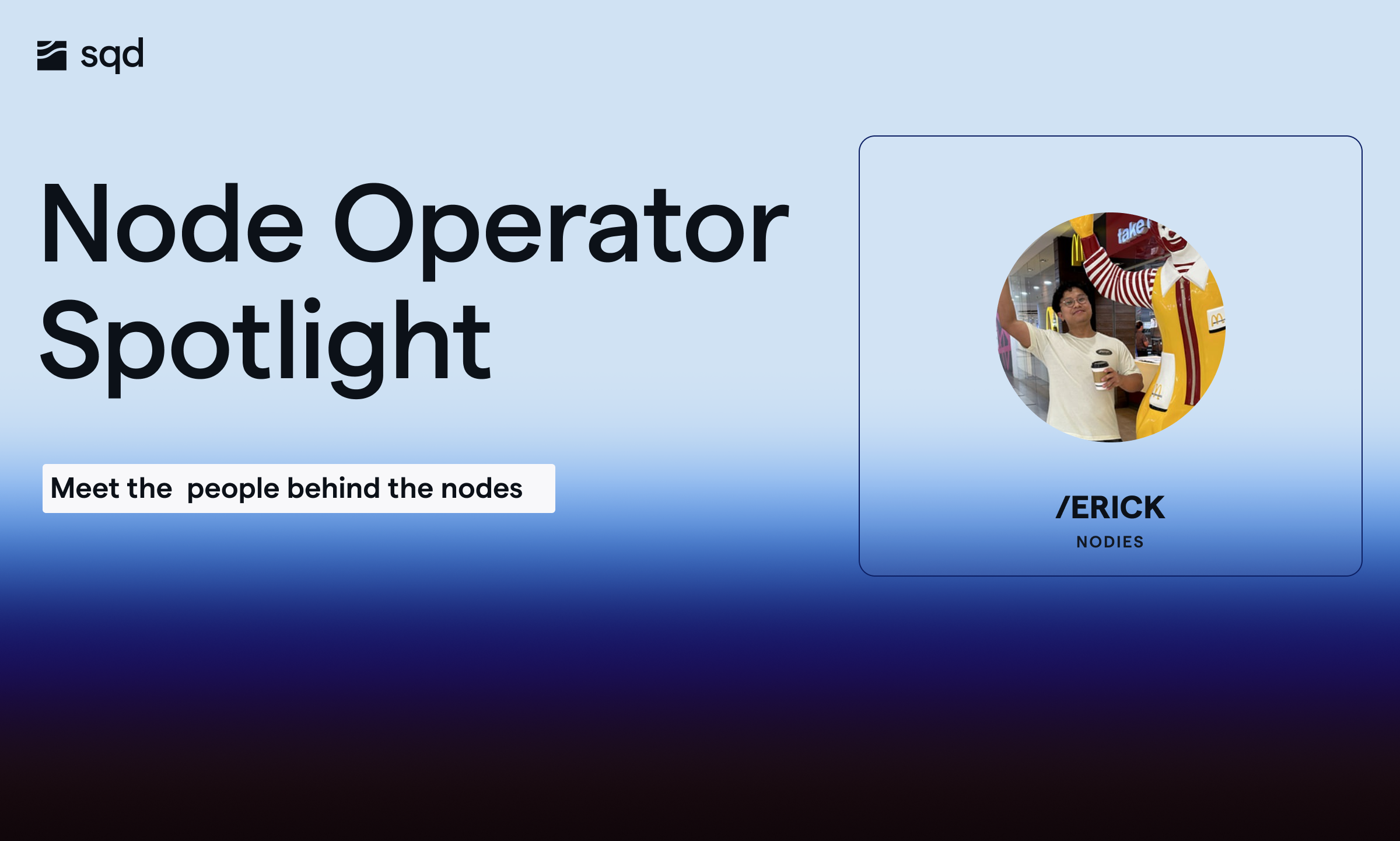
SQD Node Operator Spotlight ft Erick from Nodies
As of today, over 2,800 worker nodes are contributing to the SQD data lake, storing more than 2.4 petabytes of onchain data. This spotlight series highlights the operators powering this infrastructure.

The Story of SQD
From Subsquid to SQD — the journey of building decentralized data infrastructure for blockchain.
What happened at SQD in June?
The SQD team focused heavily on shipping products and expanding accessibility during June, moving beyond being just another altcoin to achieving major exchange listings and launching innovative products.
SQD in Numbers
What do crypto people love more than words and the Roman Empire? Exactly Numbers. So, whether you're new to SQD or have followed for a while, here's a breakdown of SQD in numbers.
Unlock Uniswap V4 Data in Minutes with SQD SDK
Uniswap V4 introduces previously unthinkable levels of customization for devs building DeFi. Learn how to use the SQD SDK to build a Uniswap V4 multichain indexer.
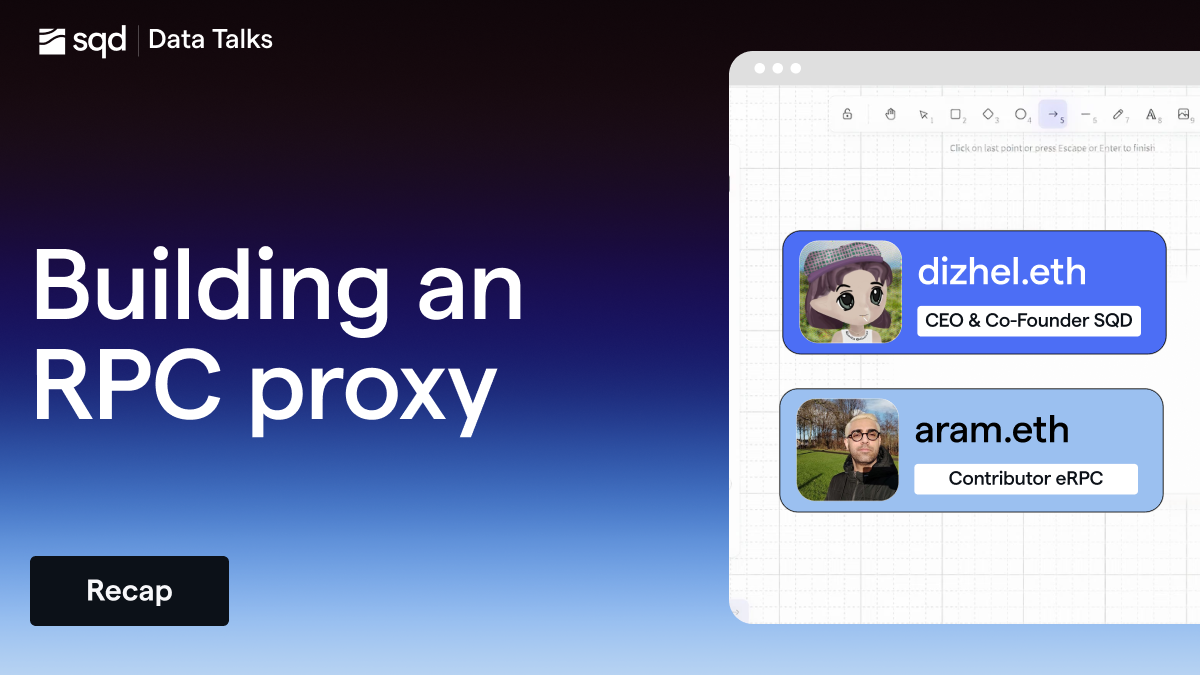
SQD Data Talk: Insights on Building an RPC Proxy
Earlier in May, Subsquid Labs launched the first episode of their new series: SQD Data Talks, aimed at discussing blockchain, data, and open-source topics with industry experts.

SQD is entering Rollout phase
SQD is evolving, phasing out training wheels and onboarding consumers directly from the cloud to the decentralized network. Tokenomics 2.0 will align token and network adoption, reducing SQD issuance while increasing demand.
The SQD Token Expands to Base
SQD's native token is now trading on Base via Aerodrome, expanding accessibility and liquidity. This expansion aligns with the Surge program, positioning SQD as a database network for the agentic economy.
Fuel Your Eliza AI Agent with SQD
Subsquid Labs has launched a new plugin enabling AI agents to access blockchain data. Autonomous, AI-driven systems are pivotal to the next era of blockchain innovation.
Deepseek, Open AI, and SQD
When DeepSeek released their open-source model, they didn't just alarm US tech companies and impact NVIDIA stocks. They likely shifted focus away from expensive custom model training toward leveraging open-source models with quality data instead.
Introducing the SQD Surge Program
With our recent announcement, we reaffirmed our vision for SQD.ai -- the first Emergent Database Network for the AI Agent Economy. We are now taking the next step with the SQD Surge Program.
The emergent database network to serve the AI agent economy
AI adoption is accelerating across sectors, including cryptocurrency, where builders deploy agents on-chain daily. While frameworks like Eliza and protocols such as Virtuals have lowered barriers to agent creation, sustained growth requires access to verified data.

2024 in retrospect
The end of 2024 is also the beginning of a new phase for SQD, one of increased decentralization - as we prepare for a full launch of the SQD Portal.

SQD Network: Six Months In: Big Plans, Bold Moves, and the Road Ahead
The article commemorates the six-month milestone of SQD Network's mainnet launch, highlighting significant progress and announcing ambitious near-term plans.
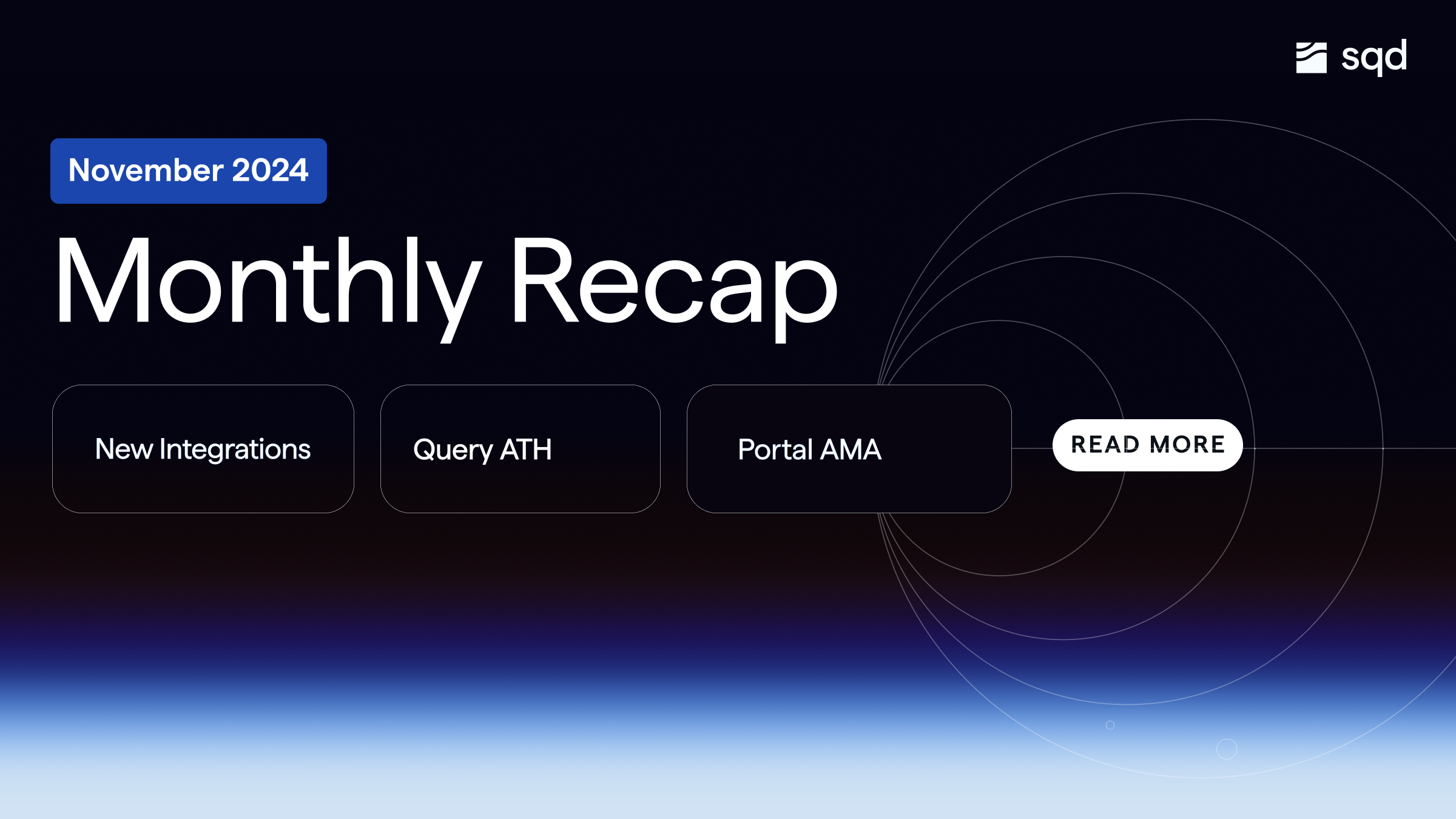
Monthly Recap: November
In November, SQD celebrated significant milestones as the cryptocurrency market entered a bull phase. The platform achieved its own all-time high with 1.5 billion queries recorded over 30 days.
Portals AMA - All you need to know
SQD CEO Dmitry held a live AMA on X discussing Portals, the next major roadmap item. Despite audio issues, the team documented key points for this recap.
The road ahead for Ethereum
During Devcon, Ethereum developers discussed competing visions for the network's future. Rather than unified consensus, two distinct proposals emerged presenting different technical directions.
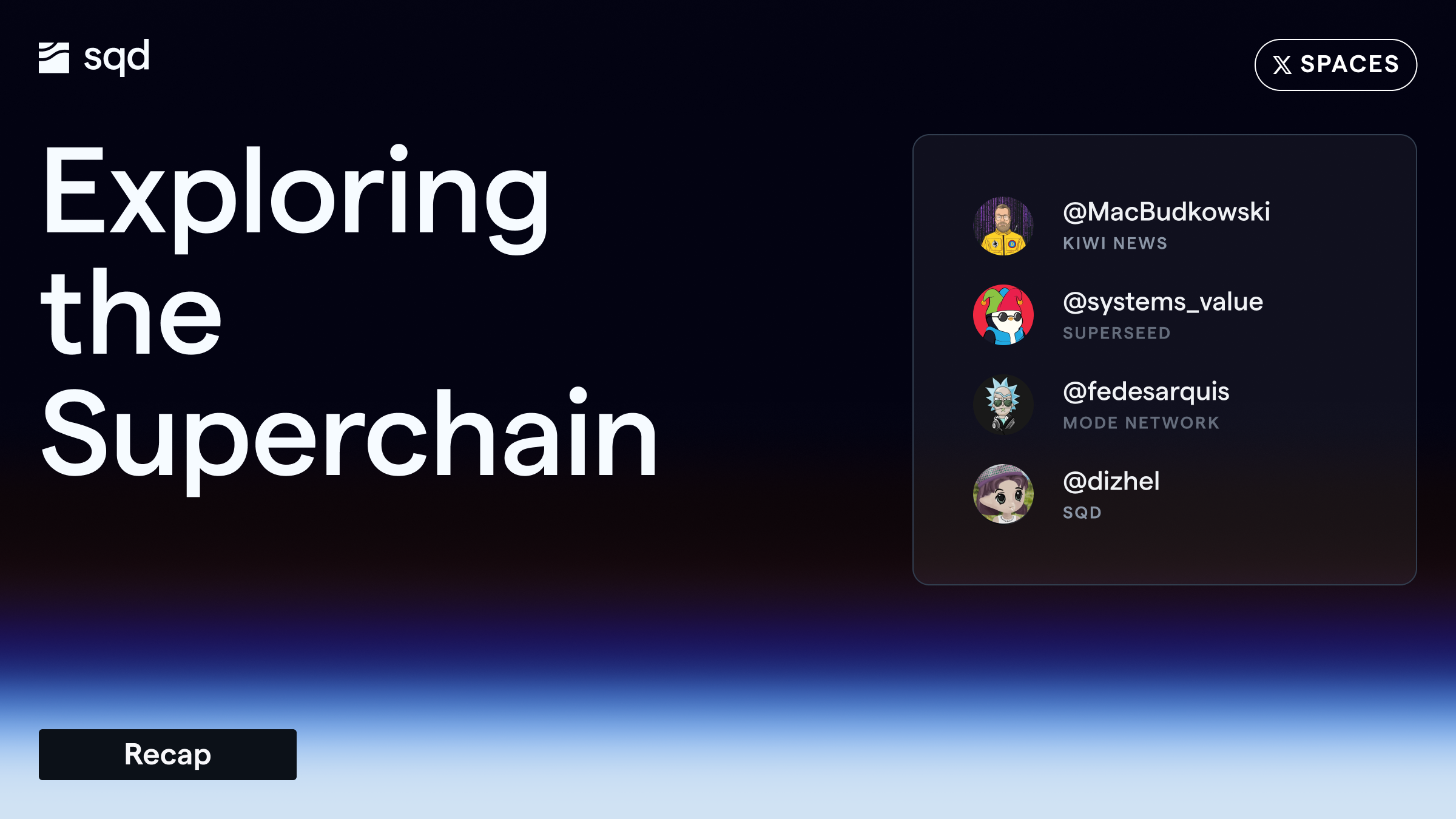
Exploring the Superchain
Want to build an L2 or launch a niche protocol these days? There's one L2 ecosystem you can't ignore... Yes, it's the Superchain.
It's time to say Goodbye to Discord
The SQD community is migrating to Telegram. The Discord server will become read-only on November 18th at 11:00 UTC.
Case Study: ChainSafe using SQD to power fast EVM deployments
ChainSafe is an R&D and web3 infrastructure company focused on protocol engineering, interoperability, and web3 gaming. They provide open-source solutions for game development, including a Unity SDK.
October at SQD: A glimpse into the Future
October's market dynamics saw AI agent portfolios outperforming human traders. Increased onchain activity driven by memes, AI enthusiasm, and Bitcoin performance generated substantial data growth benefiting SQD's infrastructure.
Cloud Deployments 2.0
SQD is committed to delivering permissionless access to blockchain data at massive scale. To help projects launch quickly without managing infrastructure, the company created SQD Cloud.

Exploring Crypto Gaming
Many years have passed since Vitalik Buterin started Ethereum after crying himself to sleep over lost items in World of Warcraft. What started as an attempt to create an ecosystem where centralized games wouldn't have such powers has turned into a vibrant ecosystem.

Bitcoin L2s: Hot or not?
Bitcoin originally promised peer-to-peer cash as an alternative to traditional finance, but has evolved beyond its initial vision. Post-Taproot upgrades have sparked renewed development, with builders creating rollups and Layer 2 solutions on Bitcoin.

What to consider when delegating your SQD
Delegating means giving some of your power to someone else in the hope they'll make the most of it. In this context, users entrust their SQD tokens to worker nodes that provide data services and receive rewards in return.

How Polimec uses SQD data to provide compliant DeFi
Polimec is a financial market settlement layer that facilitates trustless deal access and execution for web3 projects and investors. The platform simplifies project investments while maintaining regulatory compliance.

Why SQD is excited about Fuel
Fuel is an Operating System Purpose-Built for Ethereum Rollups. This article explores what makes Fuel's technical innovations exciting for the blockchain development community.
Monthly Recap: September
SQD reported significant infrastructure growth during September, with over 1,124 worker nodes online and 579 TB of data stored across the network.

SQD Network Architecture explained
SQD CEO Dmitry Zhelezov conducted an X Broadcast to detail the network's technical foundation. While most people skip the whitepaper, understanding SQD's architecture matters for Web3's data infrastructure.
How Fantasy.Top relies on SQD to provide a seamless social gaming experience
Fantasy.Top is a social betting game where players purchase influencer card packs and wager on their performance on Crypto Twitter during weekly tournaments.
How Skybreach leverages SQD data access in its games
Skybreach is a web3 gaming ecosystem connecting various games through lore and universe facilitated by smart contracts. Here's how they leverage SQD for indexing game-related events.
The problem SQD solves today
SQD is a hyper-scalable, permissionless, cost-efficient data layer for onchain data. The platform addresses fundamental challenges in accessing blockchain information across multiple chains and networks.
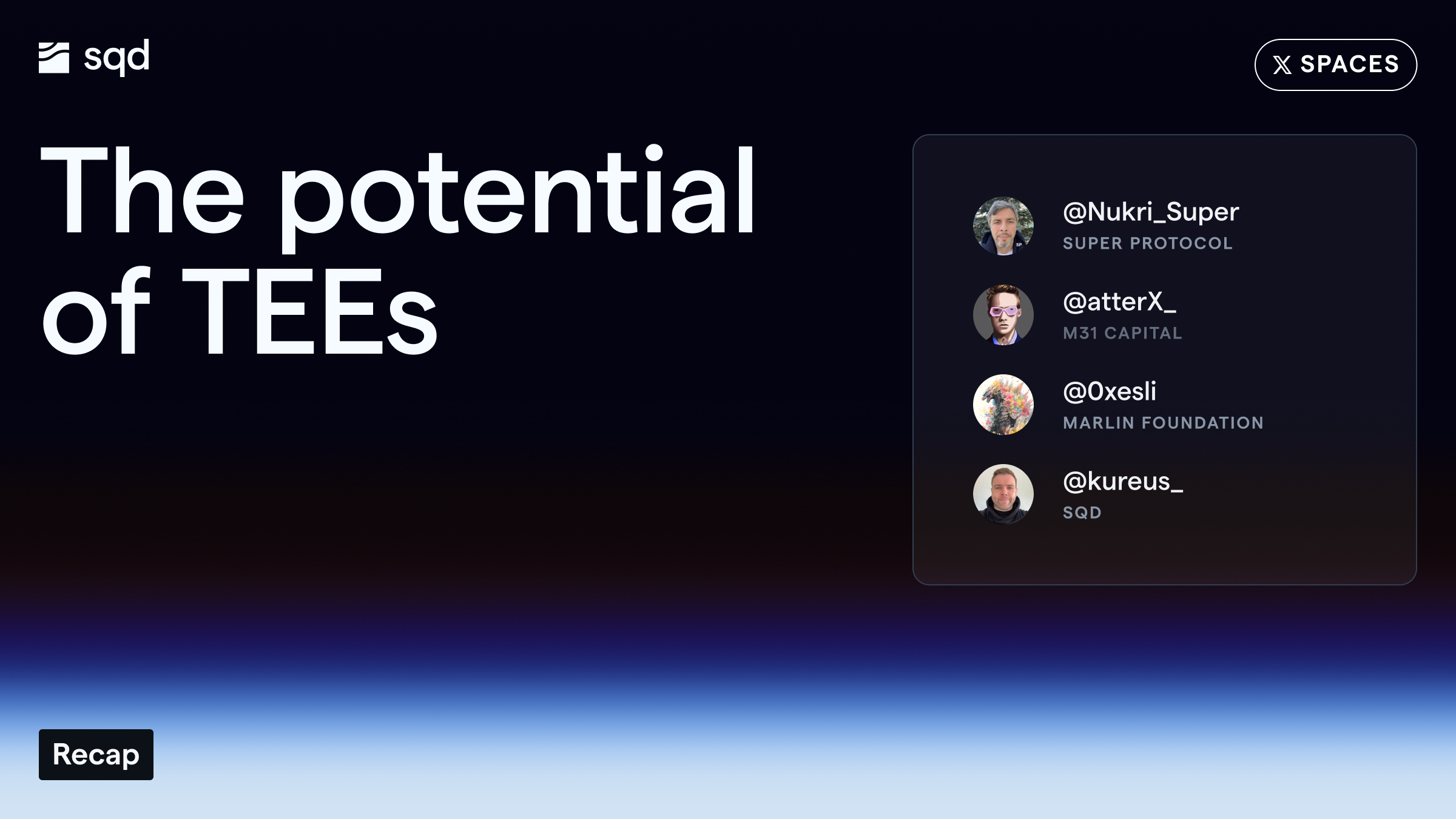
Exploring the potential of TEEs
TEEs are the latest crypto craze. Speakers explained that TEE, short for Trusted Execution Environments, represents a hardware-based security approach with significant implications for Web3.

Deutsche Telekom joins Subsquid decentralized network
T-Mobile Deutsche Telekom MMS has partnered with Subsquid, a decentralized data platform, to operate dedicated worker nodes within Subsquid's decentralized data lake.
How interface uses SQD to enable people to explore Ethereum
Interface is a social application that helps users explore and interact with Ethereum by tracking onchain activities. The platform enables users to follow friends and crypto enthusiasts.
Monthly Recap: August 2024
With the end of August also comes the end of brat summer. At SQD, we spent our time integrating with new networks and launching a new website.
Case Study: How Guru Network powers its AI processors with data from SQD
Guru Network is a multichain AI compute layer enabling dApps and users to integrate AI agents into their workflows for process automation. Here's how they leverage SQD data.
Case Study: RAILGUN leveraging SQD Trace Data to enable Privacy Pools
Railgun is a fully on-chain privacy infrastructure for EVM. It enables private use of public DeFi without any limitations on liquidity and security.
Case Study: How Hydration uses SQD Data Access to facilitate its DeFi success
Hydration is a scalable appchain on Polkadot that provides a cross-chain liquidity protocol serving as a local hub for DeFi, uniting swaps, lending, and a native stablecoin.

Insights from SQD's Broadcast with M31 Capital
After announcing its partnership with M31 Capital, SQD's co-founders held a live discussion with M31's David Attermann to explain the company's vision and development approach.
Why is everyone suddenly talking about TEEs?
TEE stands for Trusted Execution Environment, a technology that has existed for decades and enables programs to run with special protective capabilities.
The Crumbling of the Ivory Towers
Most crypto enthusiasts discover articles by scrolling through X, a pastime filled with memecoin scams, venture capital opinions, and occasional humor. But the experience includes irrelevant advertisements and declining content quality.
Monthly Recap: July
SQD announced a significant brand transition, moving away from the squid mascot toward a mature corporate identity. The native SQD token debuted on PancakeSwap on the Arbitrum network.
Case Study: How SQD Supports PancakeSwap with Large-Scale Access to Multichain Data
PancakeSwap is a leading multichain DEX built on an automated market maker model. Learn how SQD serves as their primary ETL tool, enabling rapid reindexing and up-to-date data maintenance across all networks.
AMA Recap: Discussing the Future of SQD
SQD recently rebranded from Subsquid and shared its vision beyond indexing. During an X AMA on July 18th, CEO and Co-Founder Dmitry Zhelezov discussed the company's future direction with community members.
Data is not the new oil
The article challenges the common crypto industry slogan that data is the new oil, arguing this comparison is misleading. Rather than data being the new oil, LLMs will become a commodity; Data won't.

Data Streams & Light Squid Indexers: SQD's New Game Plan
Subsquid Labs published a strategic roadmap outlining SQD Network's development through 2026. While the decentralized data protocol launched on mainnet in June 2024, the organization views this as an entirely new beginning.
How Kelp and SQD Enable Interactive Onchain Analytics
The blockchain ecosystem generates massive volumes of data daily. Bitcoin and Ethereum ledgers have exceeded 5000 GB and 1000 GB respectively. This creates a paradox: while real-time data monitoring would benefit risk management, few tools exist for analyzing this information across multiple blockchains.
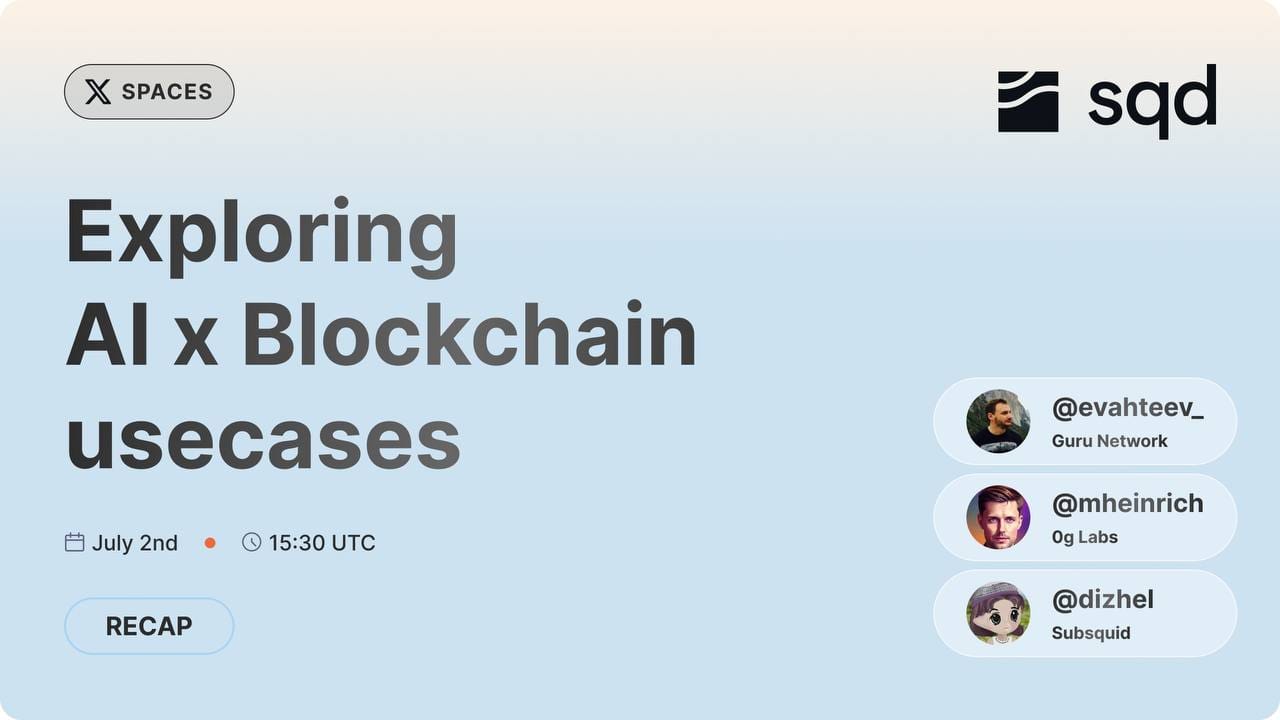
AI meets Blockchain
While blockchain transforms value transfer and AI reshapes how we work and interact, skepticism persists. However, blockchain projects are now focusing on meaningful intersections between AI and blockchain technologies.

Subsquid Becomes SQD
Subsquid, a blockchain data infrastructure project, underwent a rebranding to SQD, marking what leadership describes as the beginning of a new era. The rebrand moves away from cartoon imagery toward a more institutional aesthetic.

AltVMS: Move Over EVM
The article opens with a philosophical comparison between EVM dominance and capitalism, noting how difficult it is to imagine alternatives when something is widely accepted. Various Alt-L1 blockchains pivoted to become Layer-2 solutions during L2 mania.
Hype or Reality? A Look at Parallel EVMs
The EVM dominates blockchain infrastructure, powering roughly 60% of all DeFi transactions. Yet sequential transaction processing creates bottlenecks during network congestion. Parallel processing emerges as a potential solution.
An introduction to SQD Partner Ecosystem: Canto
Subsquid Labs recently partnered with Canto, a Layer-1 blockchain emphasizing public infrastructure and user empowerment. The teams hosted an X Space discussion about building public goods in Web3.
SQD Rewards Calculation
Subsquid operates as a decentralized network designed to scale data access while maintaining reliability, security, and decentralization. The network employs a flexible rewards system that adapts based on usage rather than fixed rates.
Get Started Guide: Delegators (Earn Rewards by Curating Nodes)
Subsquid functions as a decentralized data access layer that unlocks granular, permissionless data access at a petabyte scale. The platform's Web3 mission parallels Google's Web2 role by making vast datasets queryable and accessible.
Get Started Guide: Gateway Runners (Data Consumers)
Subsquid functions as a data-access layer for web3 that operates through a decentralized network of nodes. Gateway runners serve as critical infrastructure, connecting users' queries to this distributed data network.
Get Started Guide: Worker Node Operators
Subsquid operates as a decentralized data access layer that unlocks granular, permissionless data access at a petabyte scale. Worker nodes store and serve blockchain data chunks to network clients.
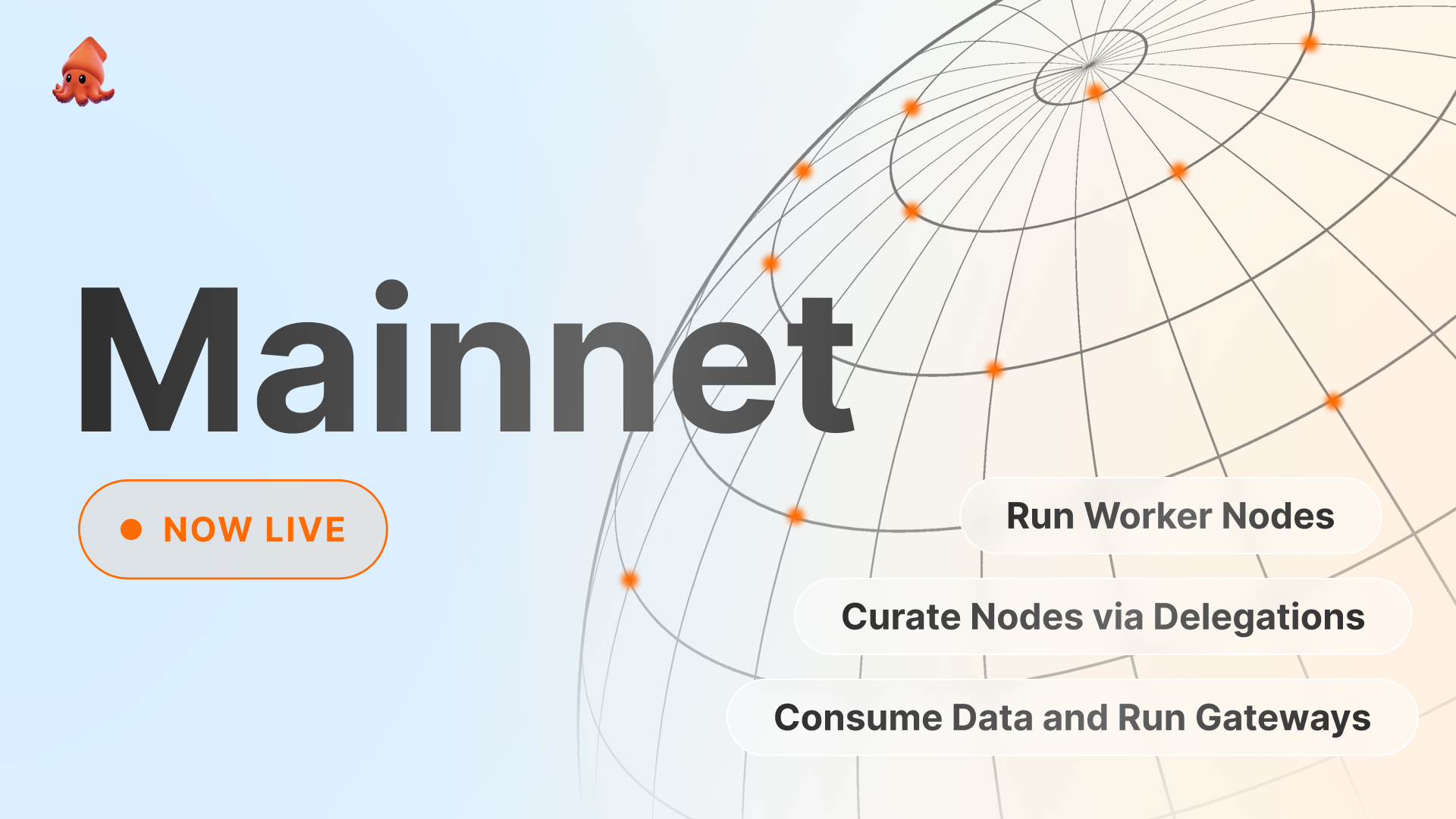
Subsquid Mainnet is Live
Subsquid is now on mainnet. This is the result of years of hard work building, optimizing, and testing the Network's core infrastructure.
Why we chose Arbitrum for SQD
Subsquid Labs selected Arbitrum as the deployment platform for its SQD token and mainnet launch. The decision was based on technical capabilities, ecosystem strength, and cost efficiency.

Making Sense of Web3 Data
Subsquid Labs organized an X space discussion featuring industry experts discussing Web3 data infrastructure, tools, and privacy considerations.

What's Next For Subsquid? A Look Back and a Look Forward
Subsquid Labs outlines the company's trajectory and future roadmap, celebrating the SQD token listing across five exchanges while previewing upcoming developments in their data access infrastructure.
Is Bitcoin Security Doing Fine?
This article examines whether Bitcoin's security model is sustainable, particularly as Layer-2 solutions build on top of it.
Unlocking AI with Subsquid
AI is only as intelligent as the data it's been given. This article discusses how Subsquid enables AI development through blockchain data access.

Indexing Solana with Subsquid
Subsquid's SDK now provides decentralized indexing tools for developers and analysts working with Solana transaction data. This article compares Solana and Ethereum data structures and walks through indexing Orca Whirlpool.
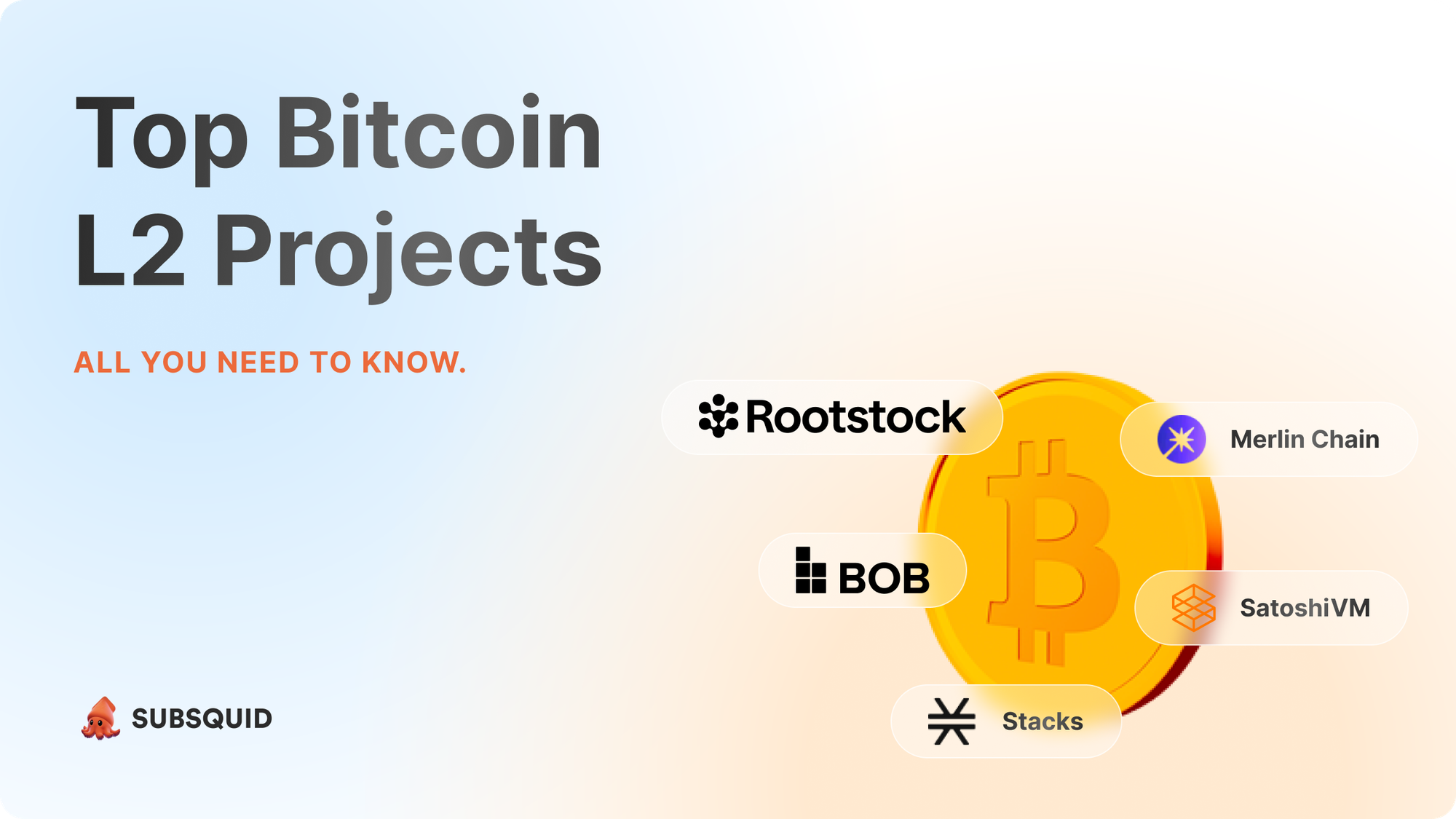
The Top Bitcoin Layer-2 Projects
This article explores Bitcoin Layer-2 solutions and their emerging importance in the cryptocurrency ecosystem, covering state channels, sidechains, and rollups.
Earn $SQD Points: Get Your Share of Subsquid's Very First Airdrop!
Subsquid Labs announced the launch of the Subsquid Points Program, rewarding developers and users contributing to Subsquid Network's development and testing through a partnership with CoinList.

What is indexing?
This blog post explores the concept of data indexing, tracing its historical roots and explaining its critical importance for Web3 development.
Why We're Excited About Bitcoin
Bitcoin mined its first block on January 3rd, 2009. Both Ordinals and rollups are expanding Bitcoin's capabilities beyond a store-of-value function, enabling broader applications.
Subsquid adds support for Prom
Subsquid's decentralized data lake now supports Prom, enabling developers building on Prom to utilize Subsquid SDK for creating indexers and accessing on-chain data.
The Top Five Solana Infrastructure Projects
This article introduces five key infrastructure projects supporting the Solana ecosystem, emphasizing that infrastructure is crucial for developer adoption and ecosystem growth.
Subsquid's First Public Testnet Closes April 1st
The largest public testnet for any data infrastructure protocol will conclude on April 1st, 2024. The initiative aimed to evaluate network resilience and security while building a decentralized developer community.
A deep dive into the world of Layer-2s
In 50 years, people may reminisce about the days when Layer 1 transactions cost less than $100. This underscores a growing problem: Ethereum fees spike dramatically during high-demand periods.
Subsquid launches Solana Private Beta
Subsquid announced the launch of a Private Beta for Solana integration. Solana integration has been on our roadmap for Q1 this year, and this is the first step in delivering on our promise.

Middle layer insights
Subsquid's CEO Dmitry Zhelezov participated in a panel at Infra Gardens in Denver discussing interoperability from infrastructure and middle layer perspectives alongside speakers from DIA, Coinfund, and LiFi Protocol.

Subsquid adding support for Etherlink
Subsquid has expanded its decentralized data lake to include support for Etherlink, enabling developers building on this Layer 2 solution to use the Subsquid SDK for creating indexers and accessing on-chain data at no cost.

From Degen to Regen
The article explores how cryptocurrency and blockchain technology can redirect speculative investment toward positive environmental and social impact through Regenerative Finance (ReFi).

Proto-Danksharding is coming: here's what people think
The next Ethereum upgrade, EIP-4844 (Proto-Danksharding), aims to reduce rollup operational costs. Currently, over 80% of rollup expenses stem from Ethereum mainnet storage fees.
Insights into Web3 native Network Design
Network design in blockchain contexts describes the process of planning and building a blockchain infrastructure. It answers the question of how you arrange a specific infrastructure to run some logic on top of it.
Deploy any Subgraph to Subsquid Network: Five Reasons Why
Blockchain data access is more important than ever in the evolving web3 ecosystem. Here are five reasons why developers should consider the Subsquid Network for deploying Subgraphs.

ArrowSquid for Polkadot: Data Superpowers for Substrate Devs
Subsquid Labs announces the public beta release of ArrowSquid for the Polkadot ecosystem, offering by far the most advanced indexing toolkit for Substrate chains.
Betting on Hardware. Or why we're excited about Solana
Subsquid Labs has decided to support the Solana blockchain. Here's why the network's technical innovations and ecosystem growth make it an exciting platform.
Creating Parquet Datasets with Squid SDK
Learn how to leverage the Squid SDK to build Parquet datasets for blockchain data analytics. Parquet is a highly efficient columnar storage file format widely used for big data analytics.

Build an Airdrop Dapp with React, Wagmi and Subsquid
This tutorial demonstrates how to integrate React with the powerful capabilities of Wagmi React Hooks and Subsquid indexing SDK to build a decentralized airdrop application.
How does Subsquid index data so fast?
Subsquid achieves rapid blockchain data indexing through a combination of decentralized storage, efficient retrieval mechanisms, and specialized tools.
How IceCream Swap uses Subsquid to power their DEX
Subsquid enables web3 developers to access blockchain data easily for various applications. As decentralized exchanges gain momentum, they rely heavily on on-chain data to facilitate token swaps and display accurate wallet balances.
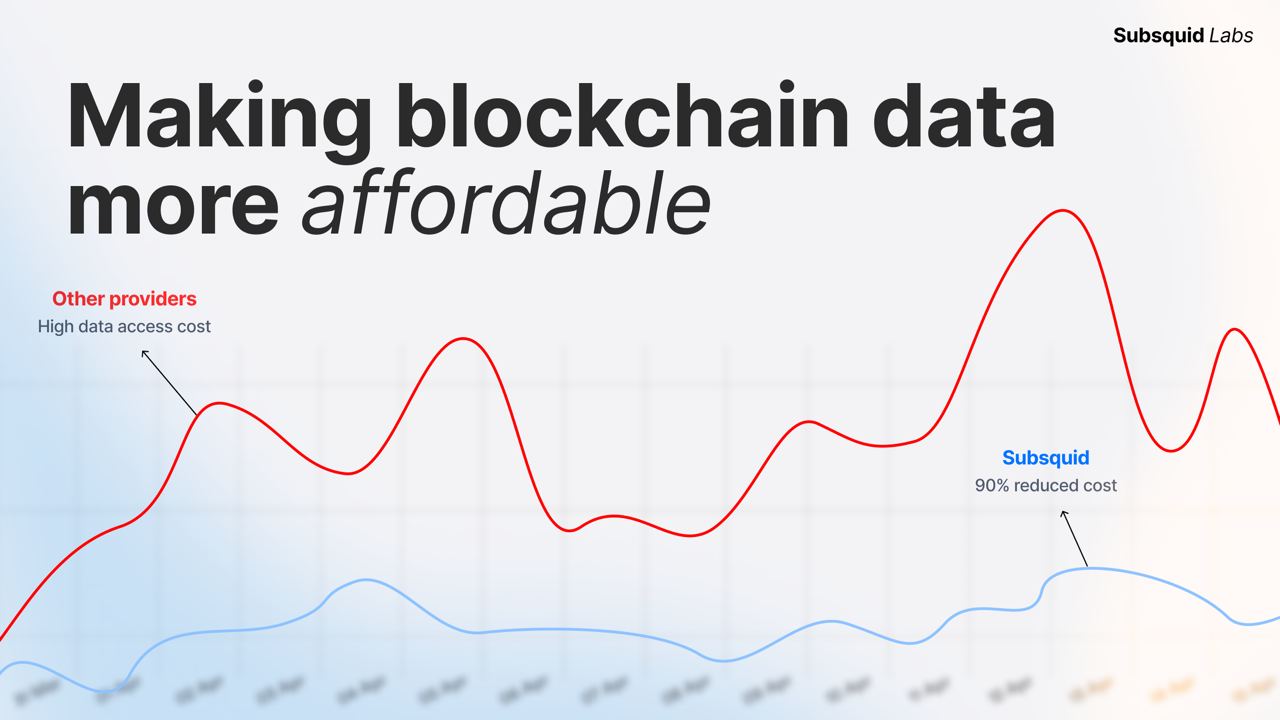
How Subsquid Makes Blockchain Data More Affordable
Free RPC endpoints, crucial for blockchain developers, are often plagued by severe rate limitations, making fast data retrieval a costly affair. Subsquid addresses these challenges with four core solutions.

Introducing: The Subsquid Network Testnet App
Subsquid Labs launches the Network Testnet App, a web-based platform optimized for mobile use that serves both developers and non-technical users interested in Web3 and decentralized data infrastructure.
Analyzing Blockchain Data with LLMs and Subsquid
This article demonstrates how to combine Language Learning Models with blockchain indexing tools to create intelligent data agents using LlamaIndex, Langchain, and Subsquid SDK.
Solving the Blockchain Trilemma with Modular Data Tools
The blockchain trilemma presents a fundamental challenge for developers balancing security, decentralization, and scalability. Modular blockchain architecture and next-generation data infrastructure tools offer a path forward.
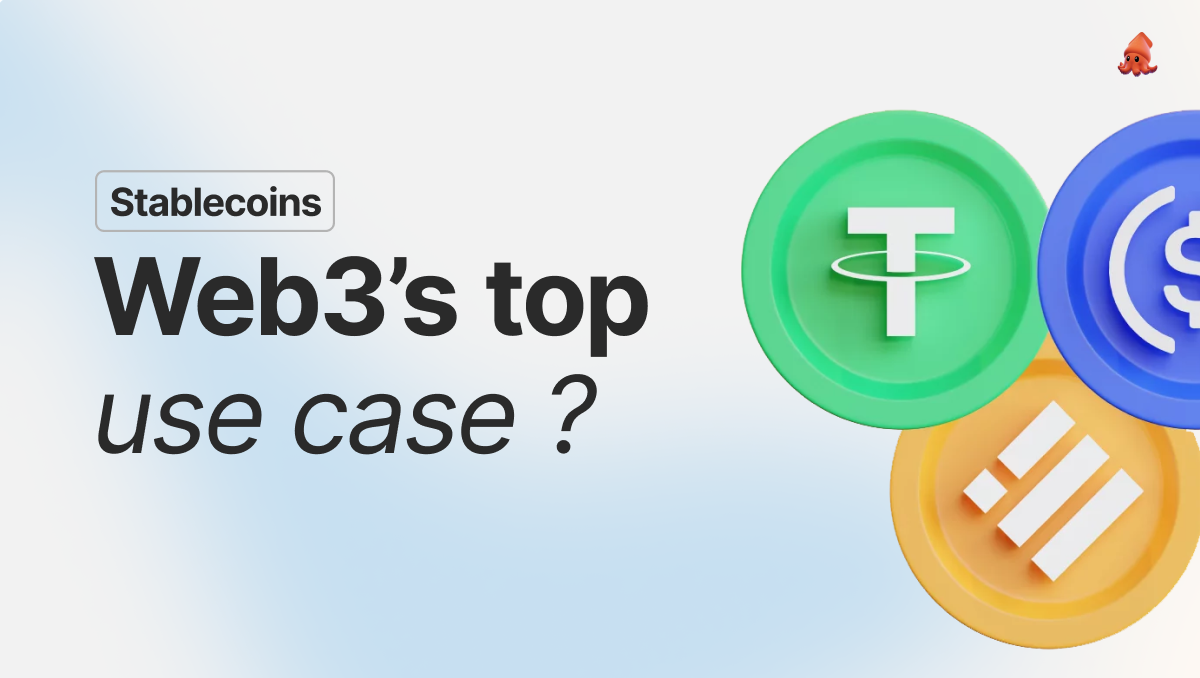
Stablecoins: The #1 Web3 Usecase?
Stablecoins have emerged as the cryptocurrency asset with the broadest adoption since Bitcoin's creation over a decade ago. Unlike volatile cryptocurrencies, they maintain stable value by being pegged to reserve assets like the US dollar.
Subsquid Ambassador Program: Join Team Sonar or Team Abyss!
Subsquid launches its ambassador program with two initial teams -- Team Sonar for content creators and community advocates, and Team Abyss for blockchain developers and technical engineers.
Subsquid and DipDup Bring Python-Based Indexing to Ethereum, L2s, and Beyond
Subsquid and DipDup have announced a strategic partnership to enable developers to create modular and extensible Web3 APIs and data pipelines.
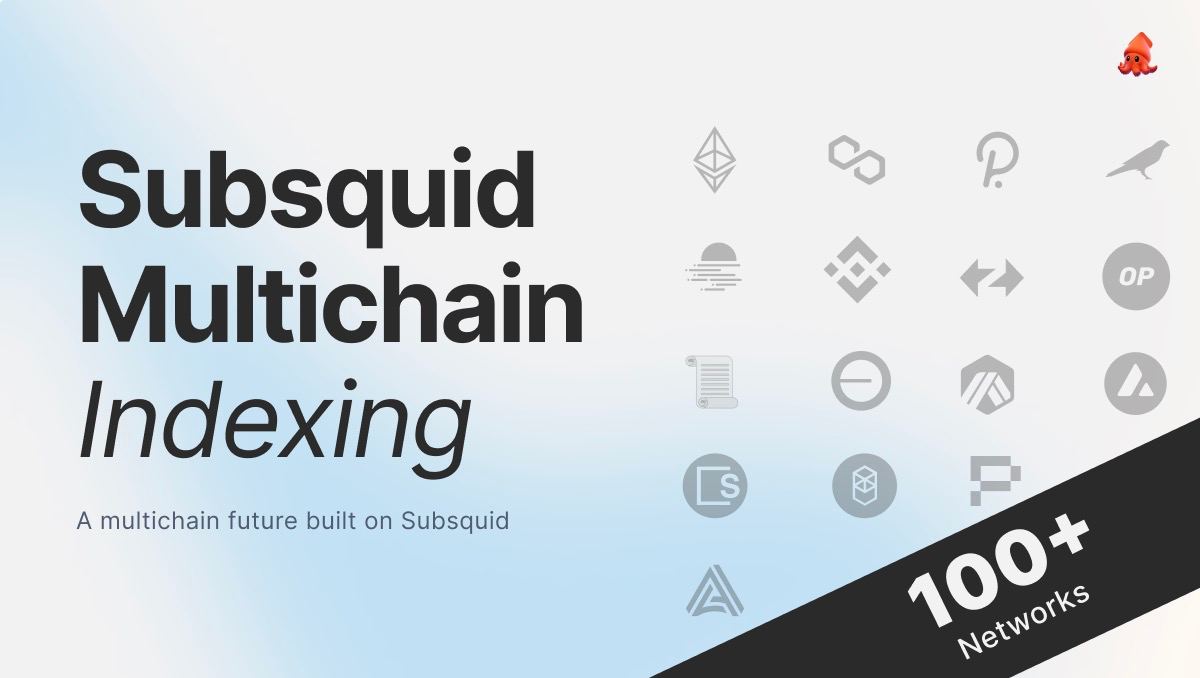
Subsquid Multichain Indexing: Empowering dApps with Unified Data Access
Subsquid has unveiled Subsquid Cloud Multichain Indexing, enabling developers to index and serve data from smart contracts on any number of chains through a unified GraphQL API.
Subsquid Network Roadmap: Official Public Release
Subsquid Labs announces the official release of the Subsquid Network roadmap, a regularly updated document available in the Subsquid Network Wiki alongside participant information.
Subsquid Network Whitepaper: Official Public Release
The Subsquid team announces the official release of the Subsquid Network whitepaper, available in the Subsquid Network Wiki alongside a complete roadmap and important information for network participants.
Subsquid Testnet Indexers: Resolving Common Issues
Developers working on Subsquid Network testnet Quests face challenges when indexing blockchain data. This article addresses common issues and their solutions.

Subsquid Testnet Migration Marathon: Code Squids and Get Bonus Points!
Subsquid Labs announced a limited-time migration event during Phase I of their testnet, which had already attracted over 30,000 developers who deployed more than 50,000 squid indexers to the network.
Subsquid Testnet Phase 2: What You Need To Know
Subsquid announces the launch of Phase 2 of its testnet beginning January 15th, 2024, following a successful Phase 1. Here are six key updates participants should understand.

Subsquid Testnet: Run your first indexer in 10 minutes or less
This guide walks users through deploying a squid indexer on the Subsquid incentivized testnet. The process emphasizes accessibility, allowing even non-technical users to set up an indexer in under 10 minutes.
Subsquid Testnet Phase 1 Complete: 50,000+ Indexers Deployed!
Phase 1 of Subsquid's testnet initiative has been a massive success, with over 30,000 community members participating and nearly 450,000 quests completed.
Web3 Data 2023, in retrospect
A comprehensive look back at the key developments in Web3 data infrastructure during 2023, from Bitcoin Ordinals to modular blockchains and decentralized RPC protocols.
What are appchains? - All you need to know
An appchain is a blockchain built with a specific use case in mind. Unlike general-purpose blockchains, appchains optimize for one particular area rather than welcoming any use case.
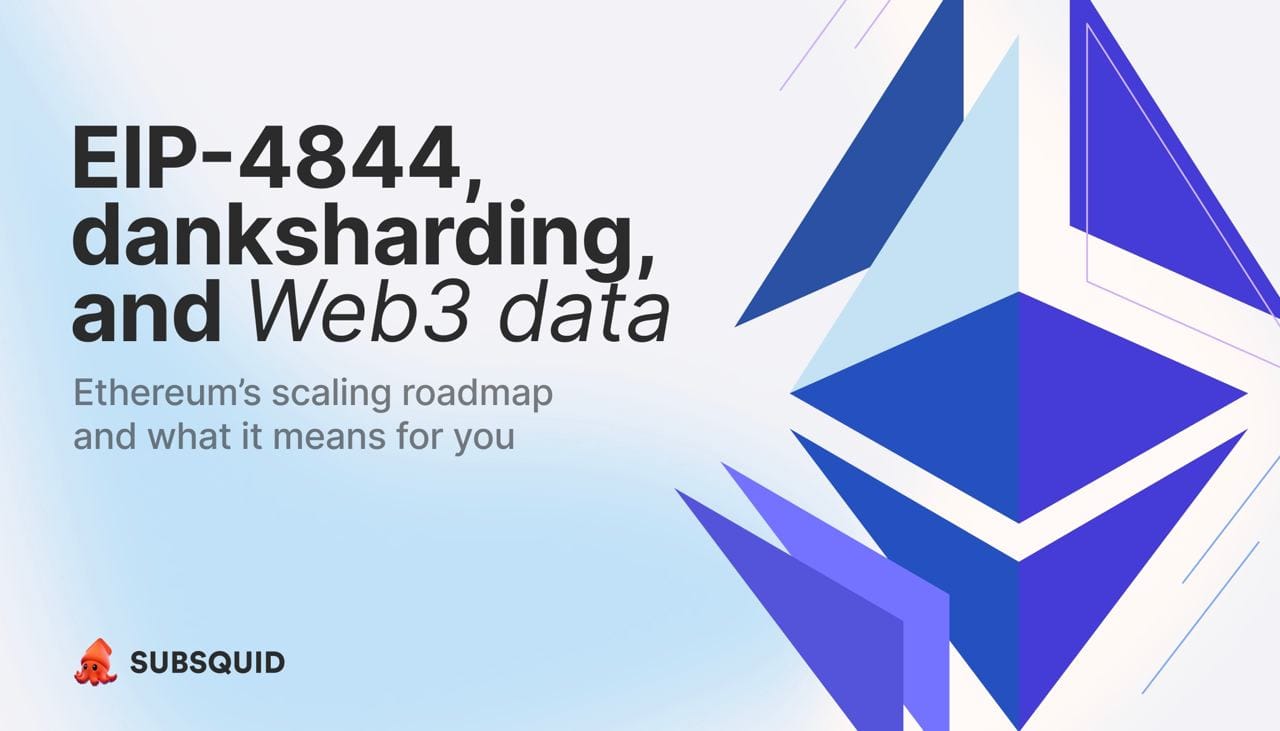
What is Danksharding? Diving into EIP-4844 and Ethereum Data
Ethereum faces well-documented scaling challenges, with users paying substantial gas fees during peak activity. Danksharding represents a promising roadmap item designed to enable Ethereum to scale to over 100,000 transactions per second.
Why leverage blockchain data?
Successful web2 companies derive competitive advantages from data stored in centralized, private databases. Blockchains are just databases that store a complete history of all transactions and activities -- and this data is publicly available.

Zero Knowledge, Zero Problems: A zkOverview
Zero-Knowledge Proofs represent a cryptographic breakthrough that enables one party to prove knowledge of information without revealing the actual data. This overview covers ZKP history, types, applications, and challenges.